

Medically Reviewed by Dr. Sunaina Vohra, DMD on September 11, 2026
When your child struggles to breathe properly through their nose, it sets off a chain reaction that reaches far beyond stuffy sinuses. Chronic breathing problems during critical developmental years can disrupt sleep quality, alter facial structure, impair cognitive function, and create behavioral challenges that affect nearly every aspect of daily life.
At Little Roots Pediatric Dental in Westbury, our board-certified pediatric dentists specialize in identifying and addressing airway-related concerns that often go unnoticed by other healthcare providers. Dr. Jessica Barzideh and Dr. Sunaina Vohra understand how breathing difficulties during childhood can create lasting health consequences, and they work closely with parents to recognize warning signs early.
The Connection Between Breathing and Physical Development
Children who breathe through their mouths instead of their noses often develop distinct facial characteristics. Constant mouth breathing places abnormal pressure on growing facial bones, leading to a long, narrow face shape, recessed chin, and crowded teeth. The tongue position changes when breathing through the mouth, removing the natural support that helps the upper jaw develop properly.
This is not simply a clinical impression. A systematic review and meta-analysis on mouth breathing and facial skeletal development in children, indexed on the National Institutes of Health’s PubMed Central database, found that children who habitually breathe through their mouths show measurably different jaw and facial growth patterns compared to children who breathe through their nose. Poor breathing patterns affect more than facial structure, too. When children don’t get adequate oxygen during sleep, their bodies release stress hormones that can affect overall growth. Research suggests that children with sleep-disordered breathing tend to be shorter and weigh less than their peers, even when nutrition is adequate, because the growth hormone released during deep sleep becomes disrupted when breathing problems fragment sleep throughout the night.
How Sleep Quality Impacts Cognitive Function
Your child’s brain does essential maintenance work during sleep, consolidating memories and clearing out metabolic waste. When breathing issues interrupt sleep, these processes cannot happen effectively. Children with untreated airway problems often struggle with the following:
- Attention and focus: Fragmented sleep prevents the brain from properly recharging, making it hard to concentrate on schoolwork or follow instructions.
- Memory formation: The brain needs uninterrupted deep sleep to transfer information from short-term to long-term memory storage.
- Executive function: Planning, organization, and impulse control all depend on well-rested brain circuits.
- Emotional regulation: Sleep deprivation makes it harder to manage frustration, leading to mood swings and outbursts.
Many children with sleep-disordered breathing receive diagnoses like ADHD or learning disabilities when the root cause is actually inadequate oxygen and poor sleep quality. Addressing breathing problems can sometimes ease symptoms without medication. We explore this overlap in more detail in our post on how bedwetting and ADHD symptoms can actually be an airway issue.
Recognizing Behavioral Signs of Breathing Problems
Parents often notice behavioral changes before they connect them to breathing difficulties. A child who wakes up cranky despite spending ten hours in bed might not be getting restorative sleep. Kids who seem hyperactive during the day could be fighting fatigue caused by nighttime breathing struggles.
Watch for these behavioral indicators: resistance to bedtime, frequent nightmares or night terrors, difficulty waking up in the morning, daytime drowsiness, hyperactivity alternating with exhaustion, and increased irritability. Bedwetting beyond age five can also signal sleep-disordered breathing, as disrupted sleep cycles can prevent the body from properly regulating bladder function.
Some children with breathing issues develop anxiety around sleep. They might avoid naps, resist bedtime routines, or insist on sleeping in unusual positions that help them breathe better. These behaviors often improve once the underlying airway problem is treated.
The Role of Dental Development
Breathing patterns directly influence how teeth and jaws develop. Children who breathe through their mouths typically have narrower dental arches because the tongue sits low instead of resting against the roof of the mouth. This creates less space for permanent teeth, leading to crowding and, in some cases, the need for more extensive orthodontic work later on.
The position of the jaw also changes with chronic mouth breathing. A recessed lower jaw can reduce airway space, creating a cycle in which breathing difficulties worsen dental problems, which then further restrict breathing. Early orthodontic intervention can help expand the upper jaw and create more room for both breathing and tooth alignment.
At Little Roots Pediatric Dental, Dr. Barzideh and Dr. Vohra evaluate not just teeth but the entire airway system. They look for signs like a high, narrow palate, tongue tie, large tonsils, and abnormal jaw relationships that might compromise breathing, following the same airway assessment approach we use across every visit. Catching these issues early allows for simpler, more effective treatment.
Common Causes of Childhood Breathing Problems
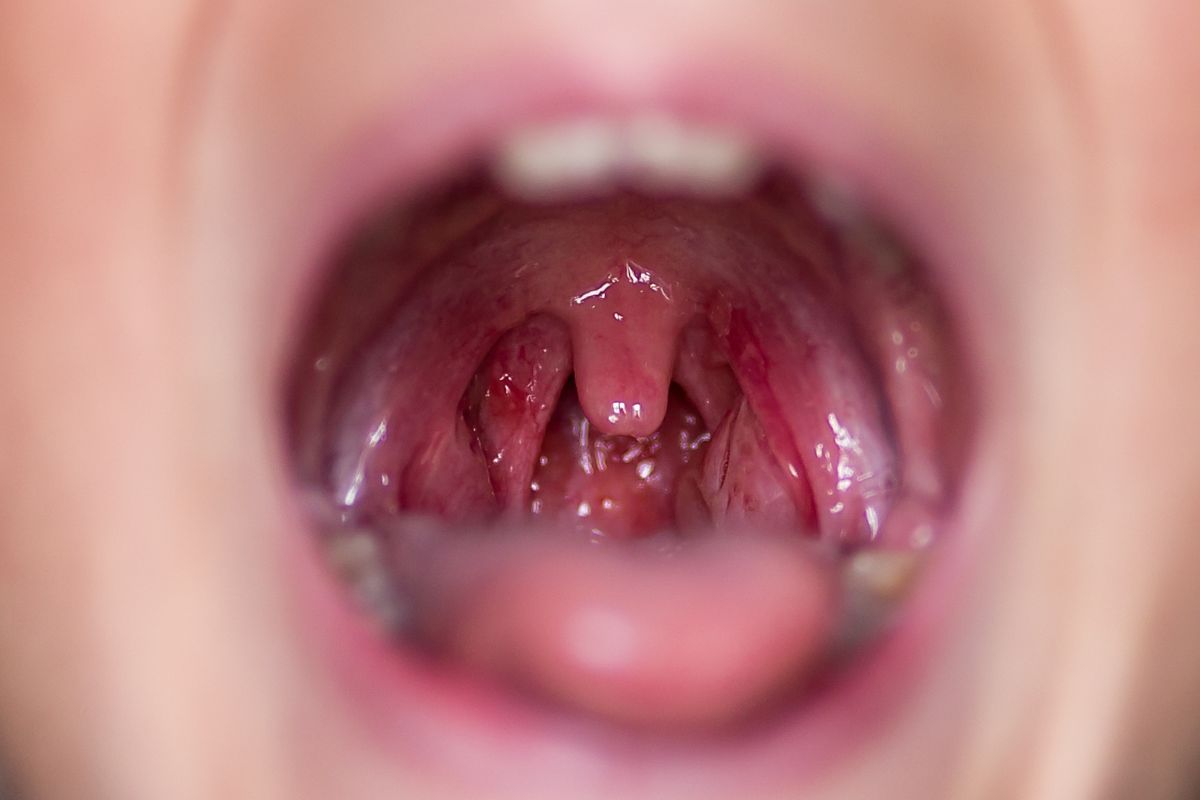
Several factors can contribute to breathing difficulties in children. Enlarged tonsils and adenoids are among the most common culprits, physically blocking airway passages. Chronic allergies cause nasal congestion that forces mouth breathing. Tongue ties can prevent proper tongue positioning, affecting both breathing and dental development.
Structural issues like a deviated septum or a small jaw can restrict airflow. Some children develop habits like thumb sucking or extended pacifier use that alter oral structures and breathing patterns. Even poor posture during screen time can affect how the airway functions.
Little Roots Pediatric Dental works with ENT specialists, allergists, and other healthcare providers to address underlying causes. When a child presents with very large tonsils or adenoids, our team may refer to an ENT for evaluation and possible endoscopy to assess the full extent of airway obstruction.
Long-Term Health Consequences
Untreated breathing problems during childhood can carry into adulthood. Sleep-disordered breathing is associated with an increased risk of high blood pressure, heart disease, and metabolic disorders later in life. Chronic sleep deprivation can also affect immune system function, making children more susceptible to illness.
The psychological impact can extend into adult years as well. Children who struggle academically due to concentration problems may develop low self-esteem and anxiety. Social difficulties stemming from behavioral issues or poor emotional regulation can persist without intervention.
Physical changes to facial structure can become more permanent once growth is complete. While orthodontic treatment can align teeth, reversing jaw position changes becomes much more difficult after adolescence, which is why addressing breathing problems early gives your child the best chance at typical development.
Taking Action for Your Child’s Health
If you notice signs of breathing problems in your child, trust your instincts and seek an evaluation. Start by discussing concerns with your pediatrician and scheduling a comprehensive dental assessment at Little Roots Pediatric Dental. Dr. Barzideh and Dr. Vohra provide thorough evaluations that examine breathing patterns, airway anatomy, dental development, and sleep quality.
Treatment approaches vary based on the underlying cause. Some children benefit from removing enlarged tonsils or adenoids. Others need palatal expansion to create more airway space. Preventive care and early intervention can help prevent small problems from becoming major health concerns, and our statistics on children’s oral health show just how common these overlooked issues really are.
Keep a sleep diary noting your child’s breathing patterns, snoring, restlessness, and morning mood. Take videos of your child sleeping if you notice unusual breathing or frequent waking. This information helps your healthcare providers understand the severity and frequency of symptoms.
Experience Comprehensive Pediatric Dental Care at Little Roots
Our team at Little Roots Pediatric Dental understands that healthy breathing is essential for your child’s overall development and well-being. As board-certified pediatric dentists with specialized training in airway dentistry, Dr. Barzideh and Dr. Vohra take a whole-child approach to dental care. They collaborate with specialists across disciplines so your child can receive comprehensive treatment that addresses every aspect of their health.
Do not wait to address breathing concerns that could be affecting your child’s growth, learning, and quality of life. Schedule an appointment at Little Roots Pediatric Dental today to give your child the foundation for a lifetime of healthy breathing and optimal development.
Frequently Asked Questions About Breathing Issues and Child Development
Can mouth breathing really change my child’s facial structure?
Research on mouth breathing and craniofacial development shows that children who habitually breathe through their mouths tend to show different jaw and facial growth patterns than children who breathe through their nose. The earlier this pattern is identified and addressed, the more options there are to support typical facial and dental development.
How do I know if my child’s behavior problems are related to breathing?
Look for a pattern rather than a single symptom, such as snoring or mouth breathing combined with daytime hyperactivity, trouble concentrating, or difficulty waking up in the morning. If those signs cluster together, it is worth mentioning to both your pediatrician and your child’s dentist.
Can breathing problems actually affect how tall my child grows?
Growth hormone is released primarily during deep sleep, so when breathing problems fragment that sleep, some children may show slower growth even with adequate nutrition. This does not happen in every case, but it is one more reason airway health deserves attention during the growing years.
What treatments are available for childhood breathing problems?
Treatment depends on the cause and may include removal of enlarged tonsils or adenoids, palatal expansion to widen the upper jaw, allergy management, or early orthodontic intervention. Our team coordinates with ENT specialists and other providers to determine which approach fits your child.
Is it too late to help if my teenager has had breathing issues for years?
It is not too late to improve sleep quality and breathing at any age, though some facial and jaw changes become more difficult to reverse once growth is complete. An evaluation can still identify treatable causes and help protect your teenager’s long-term health.
About the Author
Founder & Pediatric Dentist
Dr. Sunaina Vohra, DMD, is a board-certified pediatric dentist and co-founder of Little Roots Pediatric Dental. She completed her pediatric dental residency at the Woodhull Medical Center Pediatric Dental Program in Brooklyn, New York, where she served as chief resident, and her clinical focus includes obstructive sleep apnea and airway health in children.