

Most parents know to schedule a dental visit when their child’s first tooth appears, but few realize that an appointment could do far more than check for cavities. That early visit is an opportunity to evaluate something that shapes your child’s sleep, behavior, growth, and overall health for years to come: their airway. When airway concerns go undetected in infancy and toddlerhood, families are often left chasing a trail of confusing symptoms, from frequent bedwetting to classroom struggles, without ever connecting them to how their child breathes at night.
At Little Roots Pediatric Dental in Westbury, NY, airway health is not an afterthought added onto a routine cleaning. It is woven into every exam from the very first visit. The practice welcomes patients as young as six months old, and that early access gives the team a meaningful advantage in catching the kinds of concerns that, left unaddressed, can quietly snowball into much bigger challenges.
Why the First Year Matters More Than You Think
Feeding, breathing, and tongue movement are all connected from the moment a baby is born, and problems in any one of those areas can ripple outward quickly. As Dr. Barzideh explains,
“We want to make sure that we address the airway at each stage. As early as six months, they’re feeding from the day they’re born. If they have a tie or we notice that there’s not great tongue movement, we want to get in there and get them to the right spot. Feeding affects everything else, and tongue posture affects everything else. It all builds on each other.“
That philosophy is grounded in a prevention-first mindset that many practices simply do not prioritize. By the time a child is two or three years old, some developmental patterns have already taken hold. Early detection is not about alarming parents but about getting ahead of the curve before intervention becomes harder.
What the Team Looks for During an Exam
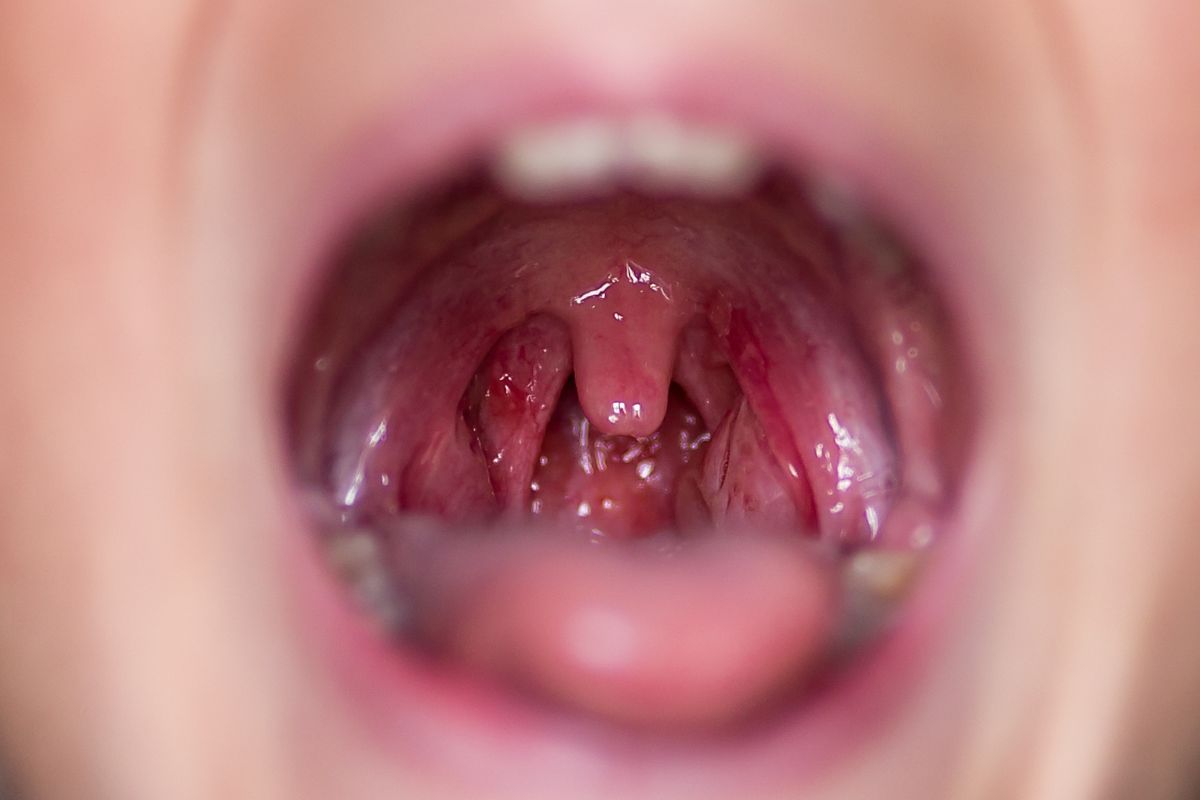
During a routine exam, the Little Roots team watches for a range of clinical indicators that can signal airway concerns. These include the size and position of the tonsils, how much the tongue fills the mouth, and whether it tends to fall back, the presence of lip or tongue ties, wear patterns on the teeth from grinding, and visible signs of mouth breathing like puffy gum tissue or persistent bad breath. Even a child’s posture in the chair matters.
“If the child’s posture is slouched over and they’re clearly mouth breathing, we will ask if they have noticed these things,” Dr. Vohra shares.
Parents who visit the first visit page will find guidance on what to expect, including the sleep and health questionnaire the practice uses to open a broader conversation with families at initial appointments.
The Symptoms That Parents Often Miss
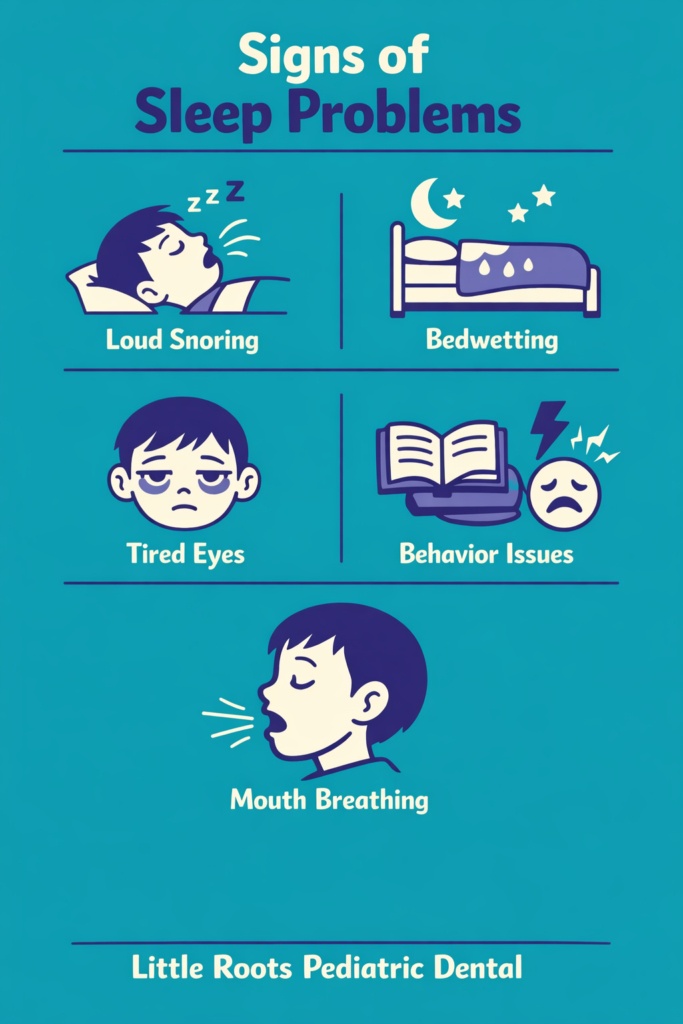
One of the most important things the team at Little Roots Pediatric Dental does is help parents connect dots they may not have known were related. Snoring, restless sleep, frequent nighttime waking, and bedwetting are all common in young children, and they can all point back to airway interference. Research on pediatric sleep-disordered breathing highlights the broad developmental consequences when these issues go unaddressed in early childhood, reinforcing why timely screening matters so much.
Behavioral concerns are another area where the connection often gets missed.
“A lot of times I find that children have a lot of these symptoms, and it just goes unnoticed. They will take them to school, they’ll take them to their class counselor or even the pediatrician, and they essentially don’t put the dots together. It could be as simple as having an airway issue. A child is just not able to breathe properly and is not able to get good sleep at night,” Dr. Barzidehl explains.
The list of subtle signs worth watching at home is wider than most parents expect. These warning signs are worth knowing:
- Frequent snoring: One of the most direct indicators of airway interference during sleep, even in very young children.
- Bedwetting: Often dismissed as developmental, but can signal a child is not reaching deep, restorative sleep.
- Bags under the eyes: A visual cue the team looks for in the chair that points to poor sleep quality.
- Academic struggles or outbursts: Behavior problems that may trace back to a child who simply cannot rest at night.
- Mouth breathing: Especially when paired with puffy gums, this pattern often points to underlying nasal or structural concerns.
These signs on their own do not confirm an airway problem, but they are exactly the kinds of details the team at Little Roots will ask about and evaluate in context.
A Quarterback Approach to Care
Little Roots Pediatric Dental does not attempt to handle every airway concern within the walls of their practice. Instead, they function as what they describe as “the quarterbacks” for their patients, coordinating with ENTs, myofunctional therapists, lactation consultants, and other specialists when the situation calls for it.
“We don’t claim to know everything, and we just try to stay in our lane,” the team notes. “It’s a constantly evolving field, and we have the empathy and the knowledge and the wherewithal to help them.”
Families can also read more about the connection between mouth breathing and sleep and the broader landscape of pediatric airway dentistry through the practice’s educational blog content.
Schedule Your Child’s Visit at Little Roots Pediatric Dental
The team at Little Roots Pediatric Dental brings a rare combination of clinical depth and genuine personal connection to every patient they see. Both board-eligible doctors understand these concerns not just as practitioners but as parents themselves, and they approach each family with patience, honesty, and a commitment to meeting them where they are rather than overwhelming them with information. The practice takes its time with families in a way that larger group practices simply cannot.
If your child is showing signs of poor sleep, mouth breathing, or any of the concerns described above, or if you simply want to establish care early and do it right, schedule an appointment with Little Roots Pediatric Dental in Westbury, NY, today.